
India’s New Labour Codes: A Complete HR & Compliance Guide for Employers, Employees & Industry
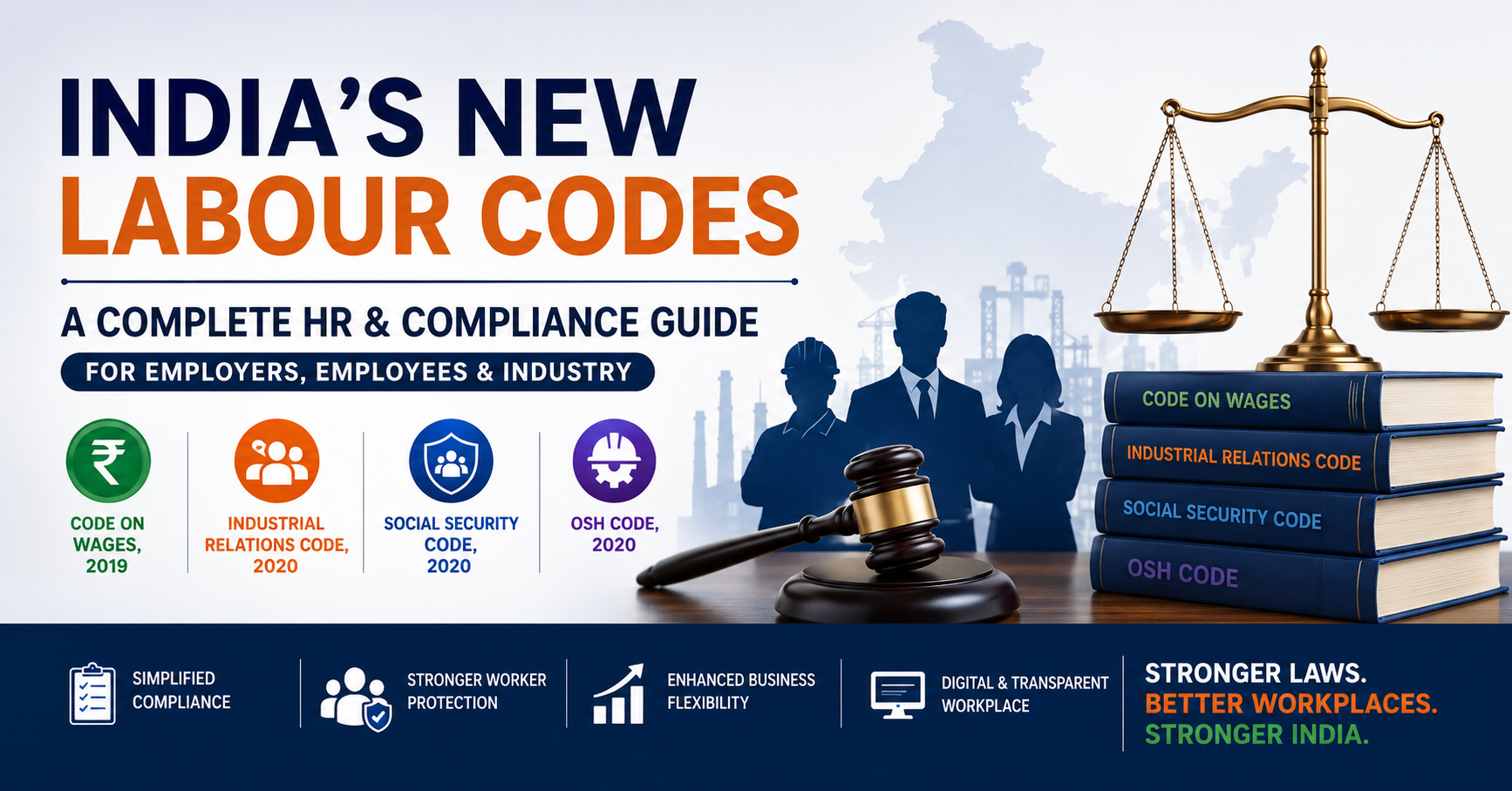
India is set to witness one of the biggest labour law reforms in its history with the implementation of the New Labour Codes. These reforms aim to simplify compliance, improve transparency, strengthen worker protection, and modernize India’s employment ecosystem for a rapidly evolving economy.
The Government has consolidated 29 central labour laws into 4 comprehensive labour codes, creating a more structured and business-friendly framework while ensuring social security and employee welfare.
Introduction to India’s New Labour Codes
The new labour reforms are expected to significantly transform payroll structures, industrial relations, employee benefits, compliance systems, and workplace safety standards.
The four labour codes are:
-
Code on Wages, 2019
Need help with this? Talk to RAJU & RAJESH → -
Industrial Relations Code, 2020
-
Social Security Code, 2020
-
Occupational Safety, Health & Working Conditions (OSH) Code, 2020
Need help with this? Talk to RAJU & RAJESH →
These reforms are intended to:
-
Simplify labour law compliance
-
Encourage formal employment
-
Improve ease of doing business
-
Expand social security coverage
-
Promote transparency in employment practices
Why India Needed Labour Law Reforms
Before these reforms:
-
29 separate labour laws existed
-
Different definitions of “wages” caused confusion
-
Businesses maintained multiple registers and returns
-
Complex inspection mechanisms increased compliance burden
-
Social security coverage for informal workers was limited
-
Industrial growth was impacted by rigid labour regulations
The new labour codes aim to solve these long-standing issues through consolidation and digitization.
1. Code on Wages, 2019 – The Most Impactful Reform
Universal Minimum Wage
The Code on Wages extends minimum wage protection to all employees across organized and unorganized sectors.
The Central Government may prescribe a “floor wage,” below which state governments cannot fix wages.
The 50% Wage Rule
One of the most significant changes is the new wage definition.
Under the Code:
-
Basic Pay + Dearness Allowance + Retaining Allowance must constitute at least 50% of total remuneration.
-
If allowances exceed 50%, the excess amount will be treated as wages.
Impact on Employees
Positive Effects
-
Higher PF accumulation
-
Increased gratuity benefits
-
Better retirement savings
-
Stronger social security benefits
Possible Concerns
-
Reduction in monthly take-home salary
-
Changes in salary restructuring
Impact on Employers
Employers may face:
-
Increased statutory contribution costs
-
Payroll restructuring requirements
-
HR and payroll software modifications
-
Recalculation of PF, ESI, gratuity, and bonus components
Timely Payment of Wages
The Code mandates strict payment timelines:
-
Monthly wages: before the 7th of next month
-
Weekly wages: last working day of the week
-
Daily wages: same day
-
Final settlement: within 48 hours of termination
2. Industrial Relations Code, 2020
Fixed-Term Employment (FTE)
The Code formally recognizes Fixed-Term Employment at the national level.
Key Benefits:
-
FTE employees receive benefits equal to permanent employees
-
Gratuity becomes applicable after one year
-
Employers gain flexibility for seasonal and project-based work
Industries likely to benefit:
-
Manufacturing
-
Logistics
-
E-commerce
-
IT/ITES
-
Automotive
Standing Orders Threshold Increased
Mandatory standing orders now apply to establishments with:
-
300 or more workers
(previously 100 workers)
This provides flexibility for smaller businesses.
Strikes and Lockouts
The Code introduces stricter rules:
-
Mandatory 14-day notice before strikes
-
Restrictions during conciliation proceedings
Retrenchment & Closure Rules
Government approval for layoffs, retrenchment, and closure is required only for establishments employing:
-
300 or more workers
3. Social Security Code, 2020
Expansion of Social Security
The Code significantly expands social security coverage.
Benefits include:
-
Provident Fund
-
ESI
-
Maternity Benefits
-
Gratuity
-
Disability Benefits
-
Employee Compensation
Gig & Platform Workers Recognized
For the first time, the law formally recognizes:
-
Gig workers
-
Platform workers
-
Unorganized workers
This is highly relevant in the digital economy involving:
-
Delivery platforms
-
Ride-sharing apps
-
Freelancing ecosystems
Maternity Benefits Continue
The Code retains:
-
26 weeks paid maternity leave
-
Creche facility requirements
-
Additional protections for women employees
4. Occupational Safety, Health & Working Conditions (OSH) Code, 2020
Stronger Workplace Safety Norms
The OSH Code consolidates several workplace safety laws.
Key focus areas:
-
Health and safety standards
-
Working conditions
-
Welfare facilities
-
Occupational healthcare
Women in Night Shifts
Women may now work night shifts subject to:
-
Consent
-
Safety arrangements
-
Transportation facilities
-
Security measures
Annual Health Check-Ups
Employers are required to provide:
-
Free annual medical check-ups for eligible workers
Contract Labour Welfare
Principal employers are given greater responsibility for:
-
Welfare facilities
-
Working conditions
-
Safety compliance
Digital Compliance Revolution
The labour codes strongly promote digitization and ease of compliance.
Key features include:
-
Single registration
-
Unified annual returns
-
Web-based inspections
-
Inspector-cum-facilitator system
-
Technology-based compliance monitoring
This will reduce paperwork and improve transparency.
Major Impact on Employers
Compliance & Payroll Challenges
Employers must prepare for:
-
Salary restructuring
-
Increased PF and gratuity liabilities
-
HR policy updates
-
Employment contract modifications
-
Digital compliance implementation
Increased Compliance Monitoring
Authorities may use:
-
Digital inspections
-
Data analytics
-
Technology-enabled scrutiny
Businesses must maintain proper documentation and payroll accuracy.
Major Impact on Employees
Positive Outcomes
-
Better retirement savings
-
Stronger social security protection
-
Improved workplace safety
-
Enhanced maternity benefits
-
Wider labour law coverage
Areas of Concern
-
Lower immediate take-home salary due to higher PF contributions
-
Adjustment challenges during transition phase
HR & Compliance Checklist for Businesses
Businesses should immediately review:
Wage & Payroll Compliance
-
Basic salary structure
-
PF and ESI calculations
-
Gratuity provisioning
-
Payroll software configuration
Industrial Relations
-
Employment agreements
-
Standing orders
-
Disciplinary policies
Social Security
-
PF/ESI applicability
-
Gig worker policies
-
Employee welfare documentation
OSH Compliance
-
Safety audits
-
Health check-up mechanisms
-
Night shift policies for women employees
Penalty Framework – Non-Compliance Can Be Costly
The new labour codes introduce stricter penalties for:
-
Non-payment of wages
-
Minimum wage violations
-
Safety violations
-
False records
-
Social security defaults
Consequences may include:
-
Heavy fines
-
Imprisonment
-
Criminal prosecution
Strategic Recommendations for Management
Organizations should:
-
Review salary structures immediately
-
Conduct HR and legal audits
-
Upgrade payroll and compliance software
-
Train HR teams on new labour code requirements
-
Strengthen documentation and internal controls
-
Monitor state-wise implementation notifications
Conclusion
India’s New Labour Codes represent a historic transformation in the country’s employment and compliance landscape. The reforms aim to strike a balance between ease of doing business and worker welfare.
For employers, proactive preparation is critical. Businesses that adapt early through proper payroll restructuring, HR policy alignment, and digital compliance systems will be better positioned to avoid penalties and ensure smooth implementation.
For employees, the reforms promise stronger social security, enhanced workplace protection, and long-term financial benefits.
The coming years will mark a major shift in India’s labour compliance ecosystem, making awareness and preparedness more important than ever.
CA SATYA RAJU KALLA
FCA, LLB, B.Com, DISA, Peer Reviewer (ICAI)
RAJU & RAJESH
Chartered Accountants
Rajamahendravaram
📞 9177444411
📧 satyaraju@rajurajesh.com
Have Questions? We're Here to Help
Get expert advice from RAJU & RAJESH. Reach out to discuss your requirements.